Insulation and encapsulation work in a Lowcountry crawl space
Charleston Lowcountry

Insulation Contractors in Charleston, SC

Crawl spaces, attics and the humidity load your air conditioning is fighting.

SC Lic. CLG.127339Licensed & insured Charleston LowcountryInsulation

Quick answer: Insulation Contractors in Charleston, SC. Southeastern Renovation is a licensed South Carolina general contractor (CLG.127339) serving the Charleston Lowcountry and York County, SC. Work is coordinated by Southeastern Renovation as the general contractor. Licensed trade subcontractors handle work requiring their trade credentials; permit responsibilities depend on the project scope and jurisdiction. Call (843) 718-8177 for an estimate.

In short: In this climate insulation is mostly a humidity problem wearing an energy-efficiency costume. The crawl space is where most Lowcountry houses lose the argument.

Southeastern Renovation is a division of Southeastern Renovation LLC, the Charleston general contractor behind Southeastern Renovation (SC Lic. CLG.127339). Work is coordinated by Southeastern Renovation as the general contractor. Licensed trade subcontractors handle work requiring their trade credentials; permit responsibilities depend on the project scope and jurisdiction.

Insulation services

Insulation in a hot, humid climate is an air problem first

R-value is what gets sold and air movement is what gets felt. In a climate like this one, uncontrolled air carries moisture as well as heat, and moisture is the load your air conditioning actually spends its day fighting. Adding depth to attic insulation over an unsealed ceiling plane improves the number on the quote and leaves the mechanism intact: warm humid air keeps moving through the gaps around fittings, top plates, chases and hatches.

The two markets differ here in a way worth naming. In the Lowcountry the dominant problem is summer: a vented crawl space drawing humid air under the house, condensing it on framing and ductwork, and an attic that drives afternoon cooling load. In the York County towns the summer problem is real but the winter side carries more weight than it does on the coast, so the balance between sealing, depth and where the insulation boundary is drawn shifts. Both are solved by deciding where the insulated envelope is and then making that surface continuous — which is a different exercise from buying more insulation.

What decides an insulation price

Access and clearance

A walkable attic with headroom and a crawl space with eighteen inches of clearance are two different labour rates for the same square footage, and the second one is why crawl space work is priced by the space rather than by the product.

Whether the existing material comes out

Removal and disposal of contaminated, wet or rodent-affected insulation is a separate operation from installing new, and it is the item most often left out of a comparison quote.

How much air sealing is in scope

Sealing top plates, penetrations, chases and the attic hatch is labour, not material. It routinely returns more per dollar than added depth, and it is the part a price-per-square-foot quote quietly omits.

Where the envelope boundary is drawn

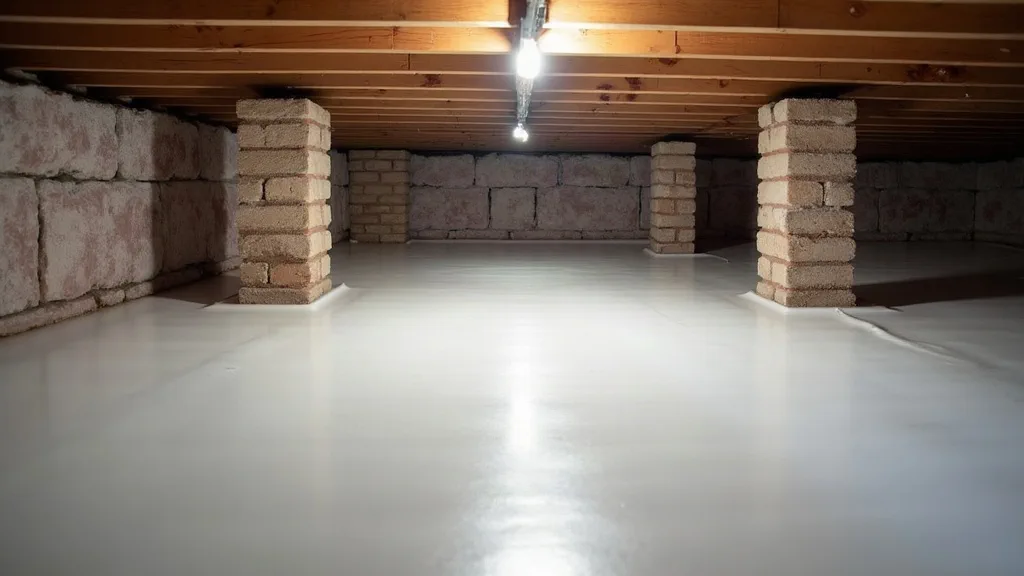
Insulating a crawl space at the perimeter walls rather than between the floor joists brings the space inside the conditioned envelope, which is what stops ductwork down there from sweating. It is a bigger scope and a different outcome, and the two should not be compared on price alone.

Licensing, and the exclusion written into the classification

Insulation installer is a registered residential specialty in South Carolina. The regulation defines it as the installation, alteration and repair of insulating materials for the purpose of temperature or sound control — and then excludes exterior roofing materials such as foam and reflective coating, which belong to the roofer classification. That is a real boundary rather than a technicality: a roof-side foam application and an attic-side insulation job are different registrations.

Registration is required once an undertaking exceeds five hundred dollars, a residential builder licence above five thousand, and a Contractor's Licensing Board licence above ten thousand. Insulation on its own is not usually permitted work, with one important exception: converting a vented attic into an unvented, insulated assembly changes how the building envelope works, and the residential code sets specific conditions for that. It is a question for the building official at your town's permit office before it is a product decision.

Why this runs through a general contractor

Southeastern Renovation contracts the job under general contractor licence CLG.127339 and licensed trade subcontractors perform the work and pull any trade permits in their own names. Insulation almost never travels alone here: a crawl space job brings drainage, a dehumidifier and the licensed electrical work to power it; an attic job brings ductwork and often a bathroom extract that was terminating in the attic. Somebody has to own that whole list, and that is the job we are actually doing.
Common questions

Is crawl space encapsulation worth it in Charleston?

For most raised houses here, yes — and the reason people notice is comfort rather than the power bill.

A vented crawl space in this climate pulls humid air in, condenses it on framing and ducts, and gives you musty smells, wood rot risk and an air conditioner permanently fighting moisture from below. Sealing it changes how the house feels.

Will encapsulation stop my floors cupping?

It addresses the most common cause. Cupping in a raised Lowcountry house usually comes from moisture entering the underside of the subfloor from a damp crawl space.

Fixing that before replacing a floor is the difference between solving it once and paying twice.

Do I need a dehumidifier down there?

Usually, in this climate. Sealing the space stops new moisture coming in but does not remove what is already there or what migrates through the slab and soil.

Most encapsulations here include one, and most that fail to hold their humidity target left it out.

What about the attic?

It is the other half of the same problem. Under-insulated attics drive afternoon cooling load hard here, and any ductwork up there loses conditioned air before it reaches the rooms.

Air sealing usually returns more per dollar than simply adding depth to the insulation.

Where we work

Also from us