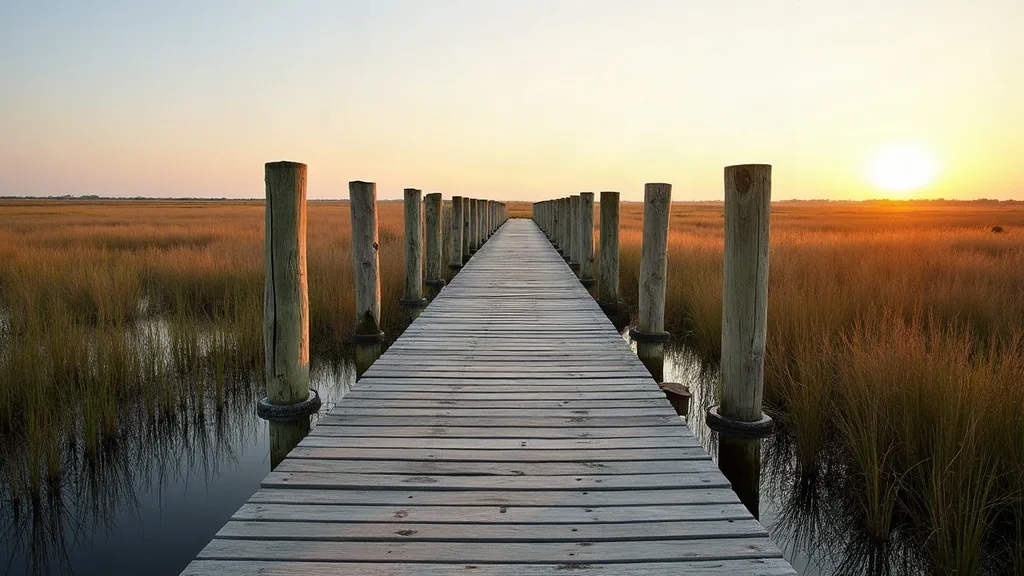
Charleston Lowcountry
Dock and Seawall Repair in Charleston, SC
Docks, seawalls, shutters and impact glazing — the work that only exists on the coast.
Docks, seawalls, shutters and impact glazing — the work that only exists on the coast.
Quick answer: Dock and Seawall Repair in Charleston, SC. Southeastern Renovation is a licensed South Carolina general contractor (CLG.127339) serving the Charleston Lowcountry and York County, SC. Work is coordinated by Southeastern Renovation as the general contractor. Licensed trade subcontractors handle work requiring their trade credentials; permit responsibilities depend on the project scope and jurisdiction. Call (843) 718-8177 for an estimate.
Southeastern Renovation is a division of Southeastern Renovation LLC, the Charleston general contractor behind Southeastern Renovation (SC Lic. CLG.127339). Work is coordinated by Southeastern Renovation as the general contractor. Licensed trade subcontractors handle work requiring their trade credentials; permit responsibilities depend on the project scope and jurisdiction.
Decking, stringers and the pilings underneath them.
Bulkheads, tie-backs and the soil disappearing behind them.
Panels, accordions and roll-downs — and the trade-off between them.
Rated glazing that needs nothing done before a storm.
This division covers two things that have little in common except where they happen. The first is work in and over the water — docks, walkways, bulkheads and seawalls — which is governed by the state before it is governed by your building department. The second is storm hardening — shutters and impact glazing — which is an ordinary building permit matter but is driven by a code requirement most of the country never encounters.
What links them is that both are decided by exposure rather than by taste. On a dock, the splash zone does the damage: the band that is wet at high tide and dry at low, twice a day, every day, which is where pilings and fasteners fail while the decking still looks sound. On a seawall the tell is not the wall but the lawn behind it — a dip or a soft patch means soil is washing out through it and the void is always larger than what shows.
Work in the critical area — the tidelands, coastal waters and the associated shoreline — requires a critical area permit from the Bureau of Coastal Management at the South Carolina Department of Environmental Services. That office was called the Office of Ocean and Coastal Resource Management, OCRM, until 2024, which is why older guidance and a good many contractors still use the old name. Docks and bulkheads are among the activities that require one, and the permit is separate from and additional to any permit your municipality issues. The process includes a public notice period, so it is a lead-time item rather than a formality, and it is established before a design is committed to.
Not every waterfront in our service area is tidal. Lake Wylie is a reservoir, not coastal water, so the state's critical area permitting does not apply there; shoreline structures on a managed lake are approved through the body that manages the lake, on a different route and a different timescale. Which regime governs a given property is the first thing we confirm, because it decides the design as well as the programme.
Walkway length over marsh, water depth at the head, the number and embedment of pilings, and whether a lift is included are the drivers. Access is the hidden one: a site reachable only from the water is a different job from one reachable from a yard.
Tie-backs, deadmen and the fill that has already been lost decide the scope. Repairing the visible face of a wall that is losing soil behind it is the most common way this work gets paid for twice.
The count and size of glazed openings drives the number, along with the route chosen — impact-rated glazing, an engineered shutter system, or the code's prescriptive panel option. Large or unusual openings are where the cost concentrates.
In this environment the fastener fails before the material. Corrosion specification on connectors, bolts and framing hardware is a genuine cost difference and the single best predictor of how long the work lasts.
There is no marine or dock classification among South Carolina's residential specialty registrations, so this work sits with a residential builder or a general contractor, with licensed electrical work — dock lighting, a lift circuit, a shore power outlet — performed by a licensed electrical contractor pulling their own permit. Above ten thousand dollars of construction a Contractor's Licensing Board licence is required. Southeastern Renovation contracts the job under general contractor licence CLG.127339. On work that needs a state permit, a local permit and a licensed trade to finish it, the single most valuable thing a homeowner can buy is one party responsible for the order those happen in.
The pilings and fasteners in the splash zone — wet at high tide, dry at low, twice a day. It is the hardest part to inspect and where a dock is lost while the decking still looks fine.
Look at the lawn behind it rather than the wall. A dip or a soft patch means soil is washing out through the wall, and the void is bigger than what shows.
Shutters cost less and need somebody present and willing before a storm. Impact glazing costs more and needs nothing.
For an upper floor or a house that sits empty, that usually settles it.