Panels, rewiring, generators and the older Charleston wiring nobody wants to open.
Diagnose it first: Why Do My Lights Flicker When the AC Comes On, and When Is It Dangerous? · Do I Need a Panel Upgrade for a Kitchen Remodel?.
Quick answer: Electricians in Charleston, SC. Southeastern Renovation is a licensed South Carolina general contractor (CLG.127339) serving the Charleston Lowcountry and York County, SC. Licensed electrical subcontractors perform electrical work; permit responsibilities depend on the scope and jurisdiction. Scope-specific provider price examples: Charleston · York County. Call (843) 718-8177 for an estimate.
Southeastern Renovation is a division of Southeastern Renovation LLC, the Charleston general contractor behind Southeastern Renovation (SC Lic. CLG.127339). Work is coordinated by Southeastern Renovation as the general contractor. Licensed trade subcontractors handle work requiring their trade credentials; permit responsibilities depend on the project scope and jurisdiction.
First identify whether you need fault diagnosis, a device or circuit installation, a panel replacement or a service upgrade. The Charleston electrical cost guide compares published examples for those specific scopes; the York County guide separates Fort Mill starting prices from nearby Charlotte context.
A service-call fee does not automatically cover the repair. Confirm diagnostic charges, after-hours terms and any credit before booking. For an installation, ask what equipment, wiring, permits, inspections and wall repairs the estimate includes.
Electrical estimating is mostly a question about routes. The device on the wall is the cheap end of it; getting a cable to that point through a finished house is the rest.
A raised house with an accessible crawl space and a walkable attic is a different building to wire than a slab-on-grade house with a low-pitch roof. Where nothing is reachable, the cost moves from the electrician to the drywall and paint that follow, which is why those trades belong in the same conversation.
A panel change inside the house is one scope. A service upgrade that involves the meter, the mast and the utility is another, because it introduces a party whose schedule nobody in the job controls.
Ask which protection, grounding or other code-related work applies to the proposed scope. Itemize it in the estimate, with the required permits and inspections, so the electrical contractor and homeowner are discussing the same work.
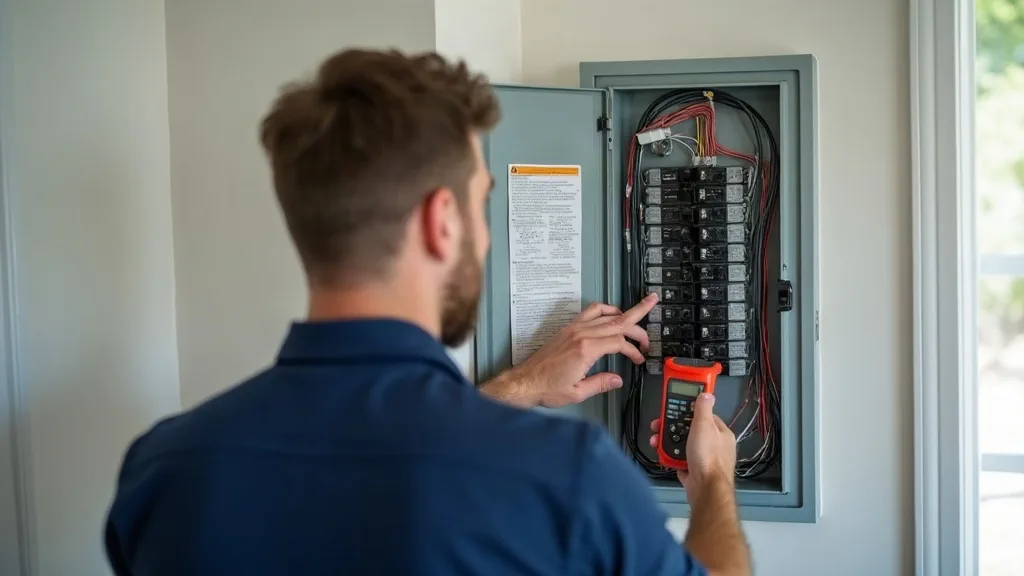
Before a car charger, a heat pump or an induction range, the answer comes from a load calculation. "The panel looks fine" is an observation. "The panel has capacity for this" is a calculation, and the capacity assessment is what the estimate needs to address.
Southeastern Renovation is a licensed South Carolina general contractor (CLG.127339). Licensed electrical subcontractors perform the electrical work. We coordinate the scope, schedule and required permit and inspection responsibilities. Ask which business holds the credentials for each part of the scope and confirm them through the South Carolina Contractor’s Licensing Board. Solar projects can involve roofing, structural and electrical work; identify the responsible contractors rather than assuming one credential covers every part.
For property inside City of Charleston limits, start with the City Permit Center’s address and application guidance. Confirm the applicable requirements with the authority for the property; a mailing address alone does not decide jurisdiction. The City’s Building Inspections page lists its current codes and inspection resources.
An electrical contractor should assess the existing equipment, wiring and loads, including anything you plan to add. Tripping breakers or dimming lights are reasons for diagnosis, not proof that replacing the panel is the solution. Ask for the load assessment and the scope of any recommended upgrade.
The condition, wiring type, connections and intended loads need inspection. The house’s age alone does not establish whether its wiring is safe or adequate. Ask the electrical contractor to document findings and distinguish a targeted repair from partial or whole-house rewiring.
List the equipment you need during an outage and ask for a system sized to those loads. Compare essential-circuit and broader backup options, fuel supply, transfer equipment, placement, permits and maintenance. A generator’s label alone does not establish that it can run every load at once.
Permit requirements and the responsible applicant depend on the work and jurisdiction. We identify those responsibilities in the project scope and coordinate required inspections; licensed trade subcontractors handle work requiring their trade credentials.
Have an electrical contractor assess the existing service and proposed loads. Spare breaker spaces alone do not establish available capacity. Ask whether the plan requires a new circuit, load management, a panel replacement or a service upgrade, and have those scopes priced separately.
Age alone is not an inspection. Have an electrical contractor evaluate condition, connections, protection and capacity before deciding what work is needed. The estimate should identify the specific findings behind a repair or replacement recommendation.
Rain-related tripping needs diagnosis of the circuit, connected equipment and exposed enclosures. It does not by itself identify a buried-wire fault or prove digging is necessary. Tell the electrician when it happens and what is connected; do not repeatedly reset a breaker or GFCI without addressing the cause.
Eight checks you can make yourself — licence, permits, insurance, a written scope — including the licence lookup that a great many articles link to using a hostname that does not exist.