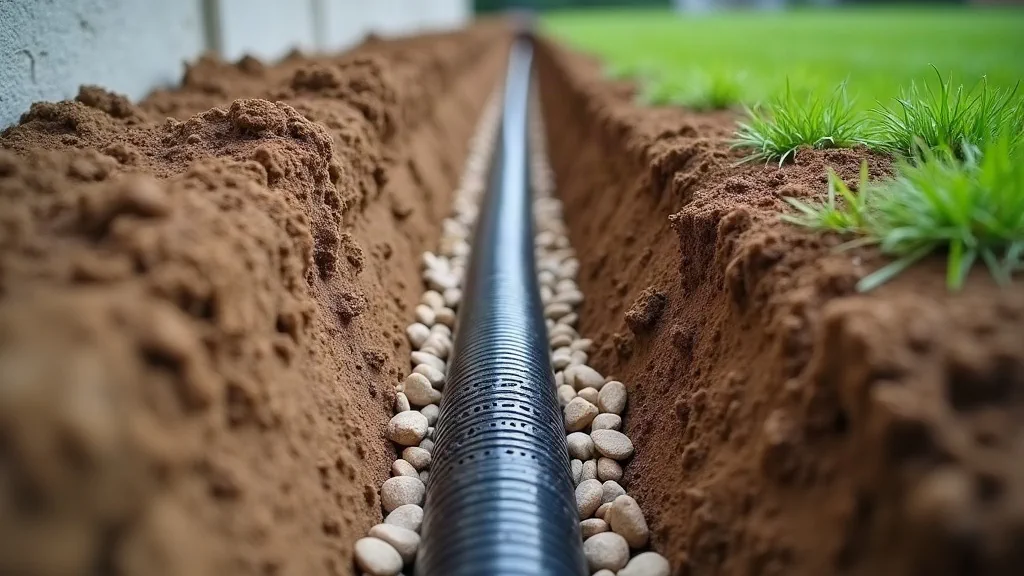
A gravel-filled french drain trench running beside a Lowcountry house foundation
Charleston Lowcountry

Drainage and French Drains in Charleston, SC

Where the water goes when the ground will not take it.

SC Lic. CLG.127339Licensed & insured Charleston LowcountryDrainage

Quick answer: Drainage and French Drains in Charleston, SC. Southeastern Renovation is a licensed South Carolina general contractor (CLG.127339) serving the Charleston Lowcountry, SC. Work is coordinated by Southeastern Renovation as the general contractor. Licensed trade subcontractors handle work requiring their trade credentials; permit responsibilities depend on the project scope and jurisdiction. Call (843) 718-8177 for an estimate.

In short: Where the water goes when the ground will not take it.

Southeastern Renovation is a division of Southeastern Renovation LLC, the Charleston general contractor behind Southeastern Renovation (SC Lic. CLG.127339). Work is coordinated by Southeastern Renovation as the general contractor. Licensed trade subcontractors handle work requiring their trade credentials; permit responsibilities depend on the project scope and jurisdiction.

Drainage services

In flat ground, the design question is where the water goes

Drainage in most other places is about collecting water and moving it away quickly. Close to sea level, with a high water table and very little fall to work with, collection is the easy half — the hard half is finding somewhere the water can actually arrive. A trench full of gravel that discharges into ground already at capacity is a trench full of water. That is why the discharge point is settled before anything is dug, and why the honest answer to "do I need a french drain" is frequently no.

Before a system is designed, three cheaper causes get eliminated, because between them they explain most standing water: downpipes discharging at the foundation rather than away from it, ground that has stopped falling away from the house after years of settlement and mulch, and a hard surface — a drive, a patio, a neighbouring extension — that redirects run-off without anybody intending it. Correcting those costs a fraction of a drainage system and it is the first thing we look at, not the last.

What decides a drainage price

The outlet, and whether gravity reaches it

A gravity outlet to a lower point is the cheap answer. Where there is no fall, the system needs a sump and a pump, which introduces power, a float, a check valve and something that can fail — a different design and a different price.

What the trench has to cross

Driveways, paths, patios, mature root systems and buried services all turn a straight run into several short ones. A utility locate happens before any digging, and where a service is in the way the route changes rather than the depth.

Soil, spoil and reinstatement

Clay-heavy ground digs slowly and holds water; sandy ground collapses and needs support. Either way the excavated material has to go somewhere, and putting the lawn, beds or hardscape back is a real line rather than a courtesy.

Whether a wall is landscaping or structure

A low decorative wall and a wall retaining a real soil load are different objects. Above a height set by your local building department, a retaining wall needs an engineered design and a permit, and drainage behind it is what determines whether it survives. We establish which side of that line a wall falls on before it is designed.

Permits: not usually a building permit, frequently something else

Drainage is one of the few divisions where the building permit is often not the relevant approval. There is no drainage classification among South Carolina's residential specialty registrations and none among the Contractor's Licensing Board's mechanical subclassifications — site and excavation work sits under general contracting, and a poured footing for a retaining wall falls under the masons classification. What does apply, and varies by jurisdiction, is local stormwater and land-disturbance regulation, floodplain rules where the property sits in a mapped flood hazard area, and, on a property fronting tidal water, the state's critical area permitting administered by the Bureau of Coastal Management at the South Carolina Department of Environmental Services.

The practical consequence is that the first question on a drainage job is not "what will you build" but "what governs this parcel". Discharging water onto a neighbour, into a wetland or into a storm system is not a design detail; it is the thing that decides whether the design is legal.

Why this runs through a general contractor

Southeastern Renovation contracts the job under general contractor licence CLG.127339 and licensed trade subcontractors perform any trade work and pull their own trade permits. Drainage reaches into other divisions constantly — a wet crawl space, a sump that needs a circuit, grading that has to respect a foundation — and the value of one contractor holding it is that the answer to "is this a drainage problem" is allowed to be no.
Common questions

Do I need a french drain?

Often not. Downpipes at the foundation and reversed grading cause most standing water, and correcting those costs far less than a system.

That comes first.

Where does a drain discharge in flat ground?

That is the whole design question here. Somewhere lower that is not already wet — and where the water table is high, sometimes a sump rather than a gravity outlet.

It is settled before digging, not after.

Will drainage fix a damp crawl space?

Only if the water is arriving from outside. A crawl space that is damp because humid air is condensing in it is a different problem, and the two are constantly confused.

Where we work

Also from us