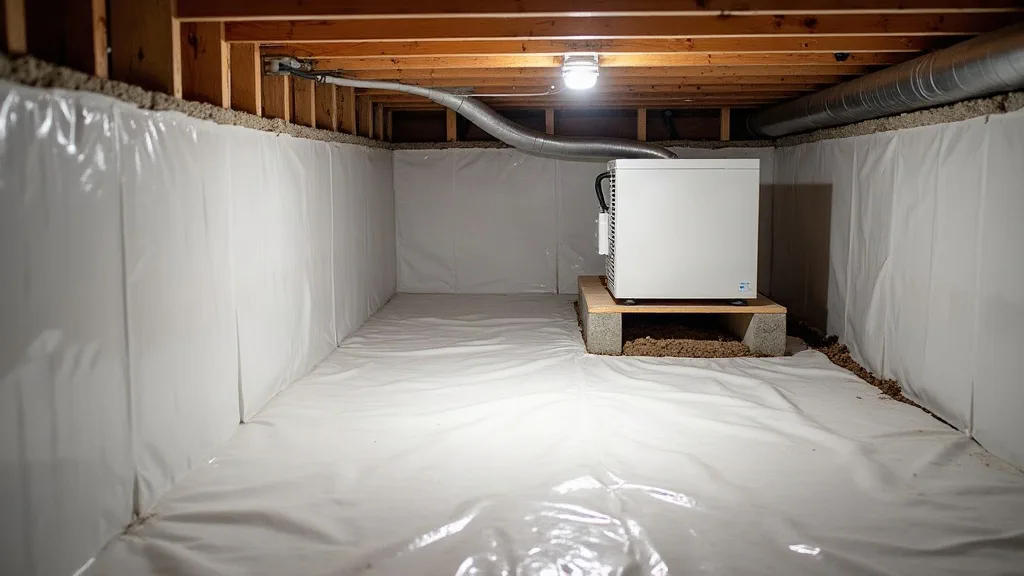
A sealed and encapsulated crawl space with a vapour barrier and dehumidifier
Charleston Lowcountry

Crawl Space Encapsulation in Charleston, SC

Encapsulation, vapour barriers, dehumidifiers and the standing water under a Lowcountry house.

SC Lic. CLG.127339Licensed & insured Charleston LowcountryCrawl Space

Quick answer: Crawl Space Encapsulation in Charleston, SC. Southeastern Renovation is a licensed South Carolina general contractor (CLG.127339) serving the Charleston Lowcountry and York County, SC. Work is coordinated by Southeastern Renovation as the general contractor. Licensed trade subcontractors handle work requiring their trade credentials; permit responsibilities depend on the project scope and jurisdiction. Call (843) 718-8177 for an estimate.

In short: Most houses here sit over a vented crawl space, and in this climate that design works against the house. Standing water, cupped floors and a musty smell upstairs all start in the same place.

Southeastern Renovation is a division of Southeastern Renovation LLC, the Charleston general contractor behind Southeastern Renovation (SC Lic. CLG.127339). Work is coordinated by Southeastern Renovation as the general contractor. Licensed trade subcontractors handle work requiring their trade credentials; permit responsibilities depend on the project scope and jurisdiction.

Crawl Space services

What decides an encapsulation price

There is no useful number before somebody has been under the house, and this is the list of what they are looking for while they are down there.

Water, before anything else

Standing water, a spring line, or ground that is simply saturated has to be dealt with before a liner goes anywhere near it. A vapour barrier over saturated ground is a barrier over a puddle. Where a sump is needed, that brings a pump, a discharge route and a circuit with it.

Clearance and what is already down there

Headroom sets the labour rate, and a failed old barrier, construction debris or fallen batt insulation all have to come out and be disposed of before the new work starts.

What the structure turns out to need

Sagging girders, rotten sill plates, failed piers and joist ends damaged by long-term moisture are found in the same visit. They are a separate scope and they come first, because a sealed crawl space over a failing structure is a very expensive way to hide it.

The dehumidifier and where its condensate goes

Most encapsulations here need one, and most that fail to hold a humidity target either left it out or drained it somewhere that stopped draining within a year. Its power supply is licensed electrical work with its own permit.

Termite inspection access

Charleston's published design criteria classify the termite hazard here as very heavy. A liner detailed tight to the top of the foundation wall can obstruct the inspection that protects the house, so the detail leaves that band visible. It is a small thing that a fast job gets wrong.

Licensing and permits: the parts that are permitted, and the parts that are not

There is no crawl space or encapsulation classification in South Carolina's residential specialty registrations. The work is a composite of several: the insulation installers classification for insulating materials used for temperature or sound control, the carpenters classification for structural repair, the masons classification for piers and poured footings, and licensed electrical work for anything that needs power. That is not a technicality — it is the reason the credential to verify on an encapsulation quote is the residential builder or general contractor licence of the firm signing the contract, because there is no single specialty licence that covers the job.

Most encapsulation is not itself permitted work. What routinely is: the electrical circuit for a dehumidifier or sump pump, structural repairs to girders, piers and joists, and in some jurisdictions the discharge of a sump under local stormwater rules. A permit is pulled by the licensed contractor performing that trade, in their own name, and a building official must refuse to issue one without evidence of licensure or exemption. Ask any quote which lines are permitted and which are not; a quote that treats the whole job as unpermitted has usually left the electrical out of it.

Why this runs through a general contractor

Southeastern Renovation contracts the job under general contractor licence CLG.127339 and licensed trade subcontractors perform the electrical and any other trade work and pull their own trade permits. Crawl space work is where that structure is worth the most, because the job crosses drainage, structure, insulation and electrical, and the failures are all at the seams between them.

Common questions

Is crawl space encapsulation worth it in Charleston?

For most raised houses here, yes, and what people notice is comfort rather than the power bill.

A vented crawl space in this climate pulls humid air in, condenses it on framing and ducts, and produces musty smells, rot risk and an air conditioner permanently fighting moisture from below. Sealing it changes how the house feels, usually within a season.

What does crawl space encapsulation cost?

It depends almost entirely on square footage, how much standing water has to be dealt with first, and whether a dehumidifier and sump are part of it.

Any number quoted before somebody has been under the house is a guess. What we will not do is price a liner over a drainage problem, because that fails and you pay twice.

Will it stop my floors cupping?

It addresses the most common cause. Cupping in a raised house here usually comes from moisture entering the underside of the subfloor from a damp crawl space, and the boards cup because they are wetter underneath than on top.

Fixing the crawl space before replacing the floor is the difference between solving it once and paying for the floor twice.

Do I need a dehumidifier down there?

Usually, in this climate. Sealing stops new moisture coming in but does not remove what is already in the space or what migrates up through the soil.

Most encapsulations here include one, and most that fail to hold their humidity target left it out.

Should the vents be closed or left open?

Closed, as part of a complete encapsulation. Closing vents on their own, without a ground liner and a way to control humidity, can trap moisture rather than exclude it.

It is the one step people take by themselves and the one that does harm on its own.

Can you insulate the crawl space instead of the floor?

That is the point of doing it properly. Insulation between the floor joists sits in the humid air and gets wet, then falls down.

Bringing the perimeter walls inside the insulated envelope puts the crawl space on the conditioned side of the house, which is what keeps the ductwork down there from sweating.

How long does encapsulation take?

Most houses are a matter of days rather than weeks, and the variable is what has to happen before the liner goes down — standing water, a failed vapour barrier, or debris left by whoever was under there last.

Will it fix a smell upstairs?

Often, because the smell usually is the crawl space. Air moves upward through a house, so what is under the floor ends up in the rooms above it.

If the smell survives a proper encapsulation, the cause was somewhere else and worth finding.

Do I need a permit for it?

Usually not for the encapsulation itself, but electrical work for a dehumidifier is permitted work and the licensed electrician pulls it.

Ask which parts of the quote are permitted and which are not.
Where we work

Also from us

Before you hire anyone

Eight checks you can make yourself — licence, permits, insurance, a written scope — including the licence lookup that a great many articles link to using a hostname that does not exist.

How to choose a crawl space contractor in Charleston →