Choosing a contractor
How to Choose a Crawl Space Contractor in Charleston, SC
Eight checks, all of which you can make yourself before signing anything.
Eight checks, all of which you can make yourself before signing anything.
South Carolina has no crawl space or encapsulation classification. The work is a composite of several: insulation installer for the insulating materials, carpenter for structural repair, mason for piers and footings, and licensed electrical work for anything needing power.
That means the credential you can actually verify is the residential builder or general contractor licence of the firm signing the contract. The lookup is at verify.llronline.com — not verify.llr.sc.gov, which a great many articles print and which has no DNS record at all.
The encapsulation itself usually is not. The electrical circuit for a dehumidifier or sump pump is, and structural repairs to girders, piers and joists are. Each permitted element is pulled by the licensed contractor performing that trade, in their own name.
A quote that treats the whole job as unpermitted has often left the electrical out of it, which is one of the two most common reasons an encapsulation fails to hold a humidity target.
Ask the agent to send it, and ask whether workers’ compensation covers everyone who will be on your property.
This is confined-space work under somebody’s house. A forwarded PDF proves nothing about whether the policy is still in force.
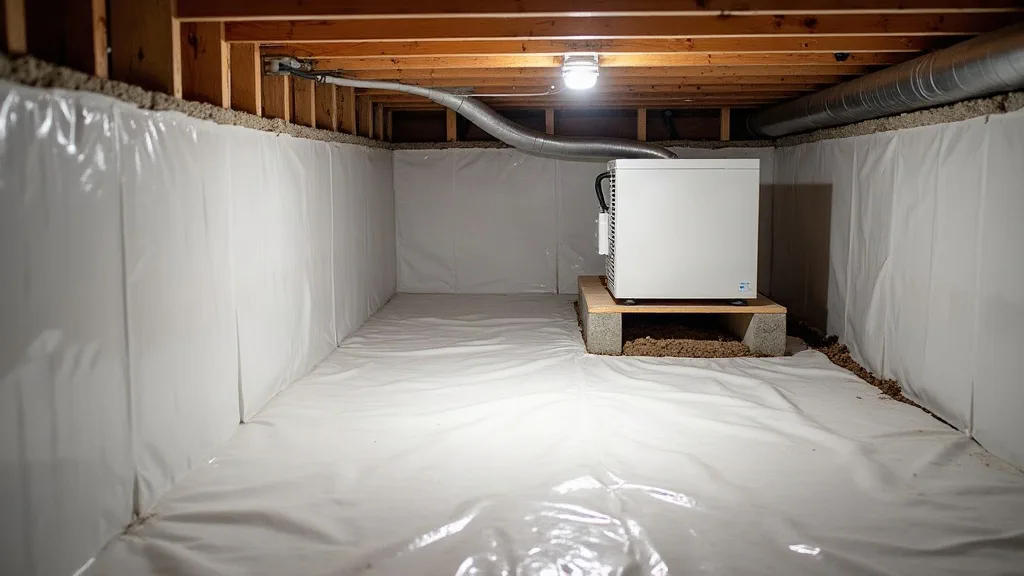
A real encapsulation scope names the liner and its thickness, how seams and the perimeter are treated, whether the piers and walls are covered, the dehumidifier by make and capacity, where its condensate goes, and whether a sump and discharge are included.
Two quotes that both say "encapsulation" and differ by half are almost always two different lists of those components.
Square footage, standing water, clearance, what the last contractor left down there and the condition of the structure all move the number, and none of them can be established from a driveway.
A firm number quoted over the phone is either padded or about to be revised.
The rating matters less than how the business behaved when something went wrong. A calm, specific reply to a bad review tells you more than fifty five-star ratings.
For this trade, the review worth finding is the one where the humidity target was never met — and what the company did about it.
Ask what happens to the water before the liner goes down. A vapour barrier over saturated ground is a barrier over a puddle, and it will hold its humidity target for exactly as long as the weather stays dry. Drainage first, then the liner.
Ask whether the quote includes a dehumidifier and where its condensate goes. Most encapsulations that fail to hold a humidity target left the dehumidifier out, and most of the rest drained it somewhere that stopped draining within a year.
Southeastern Renovation is a general contractor, SC licence CLG.127339, and you can check that at the link above rather than taking our word for it. On a job with no specialty licence of its own, that is the point: the contract is held by a licensed contractor, the electrical is performed by a licensed electrical subcontractor who pulls the permit in their own name, and the drainage, structural and insulation work is sequenced rather than left to discover each other under the house. Scopes are written before prices.