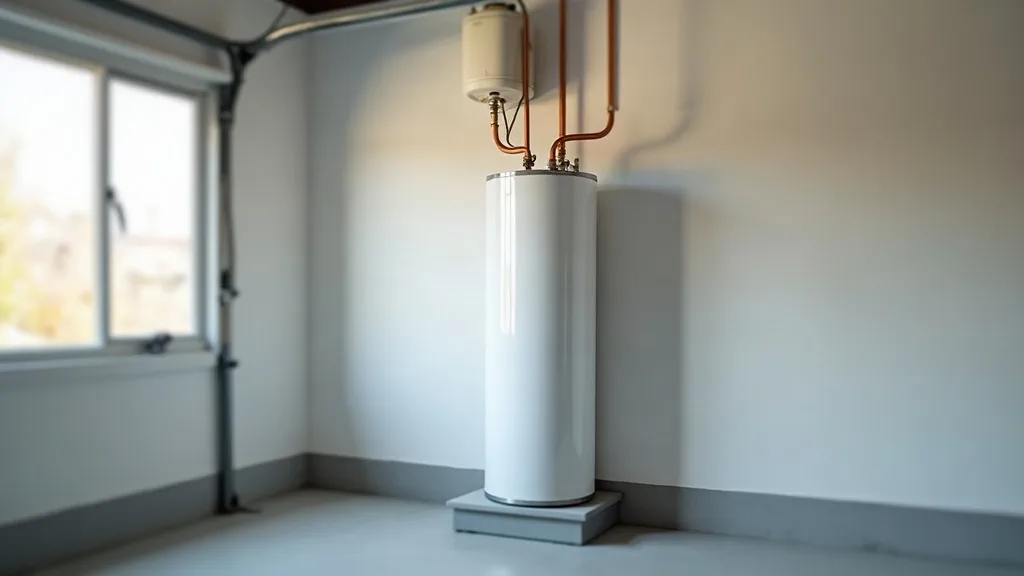
Maintenance · the number the industry does not publish
How Often Does a Tankless Water Heater Really Need Descaling Here?
The annual-flush advice is written for water four times harder than Charleston’s. The warranty condition still stands.
The annual-flush advice is written for water four times harder than Charleston’s. The warranty condition still stands.
Quick answer: The annual-descaling advice you will read everywhere is written for hard water. Charleston’s is not hard — the utility publishes about 54 to 58 ppm — roughly 3.2 to 3.4 grains per gallon and calls it moderately soft, and USGS classes anything under 60 mg/L as soft. Noritz sets its warranty threshold at 12 grains, about four times Charleston’s figure. That slows the rate scale forms; it does not release you from the manufacturer’s maintenance condition. Get your interval in writing from whoever installs it, and fit isolation valves so the flush costs $185 rather than a teardown. Call (843) 718-8177.
Ask any plumber what the downside of a tankless water heater is and you will hear the same thing: you have to flush it every year, and hard water will eat the heat exchanger if you do not. It is the objection that kills more tankless sales than price does.
It is also the one piece of tankless advice that is measurably wrong in this market, and it is wrong in a way you can check yourself in about ninety seconds on your own utility’s website.
What follows is the honest version, including the part where you still have to do the maintenance.
Scale is calcium and magnesium coming out of solution and baking onto a hot surface. It is the white crust in a kettle. On a tankless heat exchanger it insulates the metal from the water, so the burner runs longer to reach the same temperature, and eventually the unit throws an error rather than damage itself.
USGS puts it plainly: when hard water is heated, solid deposits of calcium carbonate form, and the scale reduces equipment life and lowers efficiency (USGS — hardness of water).
All of that is true. The question is how much calcium and magnesium is in the water arriving at your house, and that is a published number, not a matter of opinion.
Charleston Water System’s FAQ: “The average hardness level of our water is 58.4 ppm, or 3.4 gpg.”, under the heading that its water is moderately soft (Charleston Water System FAQ). Its 2025 annual average in the current water quality report is lower still, 54 ppm or 3.16 grains (Charleston Water System 2025 Water Quality Report).
Noritz’s owner’s guide: “If the water supply is in excess of 12 gpg (200 mg/L) of hardness, acidic or otherwise impure, treat the water with approved methods in order to ensure full warranty coverage.” (Noritz Owner’s Guide (NRCR/EZ series)). The same document lists a maximum allowable total hardness of 200 mg/L (12 gpg) or less, and lists water above 12 grains among the things the limited warranty does not cover.
Charleston arrives at about 3.2 to 3.4 grains. Charleston runs about a quarter of that threshold, and York County about a sixth.
| Utility | Hardness | Grains per gallon | Source |
|---|---|---|---|
| Charleston Water System | 54–58.4 ppm | 3.16–3.4 gpg | Charleston Water System 2025 Water Quality Report · 2026-05 |
| Mount Pleasant Waterworks | 40–44 ppm | 2.3–2.6 gpg | MPW monthly water quality reports · 2026 |
| Lake Moultrie supply — Summerville CPW, Goose Creek, Moncks Corner | 23 ppm | 1.35 gpg | Summerville CPW 2025 Water Quality Report · 2025 |
| Rock Hill — and Fort Mill, Tega Cay, York | 35 ppm | about 2 gpg | City of Rock Hill Water Quality Report · 2024 data |
| Charlotte Water | 38 ppm | about 2.2 gpg | Charlotte Water — water quality · 2026-08-14 |
USGS: 0–60 mg/L is soft, 61–120 moderately hard, 121–180 hard, over 180 very hard (USGS — hardness of water). Rock Hill and Charlotte publish parts per million and not grains. The grain figures beside them are ours, at 17.1 ppm to the grain.
Three reasons, and only one of them is about your water.
The first is that national content is written nationally. A flush interval that suits Phoenix at 16 grains is the number that ends up on a Charleston page, because nobody looked up Charleston.
The second is that the flush is a billable visit. It is between $150 and $350 nationally, $185 to $249 here, and a recurring service item is worth more to a contractor than a correct one.
The third is legitimate: the manufacturer makes coverage conditional on maintenance, and the manufacturer does not know what is in your water. So the conservative interval protects them and it protects the installer, whatever the chemistry.
One of the larger local home services companies runs an article on how Charleston’s hard water shortens appliance lifespans. Another national brand’s Charleston page says the water is about 25 ppm, which is less than half the utility’s own figure.
Both are checkable against a public document in under two minutes, and both are wrong in opposite directions. That is the state of published information on this subject in this city.
⚠️ Nothing on this page is permission to skip maintenance. Soft water changes how fast scale forms. It does not change what the warranty asks of you.
| Service | Published price | Source |
|---|---|---|
| Tankless flush, national range | $150 – $250, averaging $200 | Angi — water heater flush cost · 2026-07-10 |
| Tankless flush, national range | $150 – $350 | HomeGuide — cost to flush a tankless water heater · 2026 |
| Tankless flush, Charleston | $185 | Swell Guy Plumbing Co. published price ranges · 2026 |
| Tankless service, Charleston | $249 | Coastal Flow Solutions — Charleston tankless service · 2026 |
| Tankless service, Charlotte | $300 – $400 | Full Spectrum Plumbing Services — servicing a tankless in Charlotte · 2026-05-18 |
Two of those are local and published on the company’s own website, which in this market is unusual enough to be worth saying.
Less often than the national advice assumes, and the interval should come from your installer in writing rather than from an article. Charleston Water System publishes hardness of about 54 to 58 ppm — roughly 3.2 to 3.4 grains — against a Noritz warranty threshold of 12 grains.
The honest process is to have the first flush done on schedule and look at what comes out. Clear water means the interval can stretch; cloudy water means it cannot. What you should not do is assume the annual figure is wrong for your house without checking, because the warranty condition applies regardless of what the water report says.
No. The warranty conditions run the other way — Noritz excludes damage from water in excess of 12 grains per gallon, and lists 200 mg/L as the maximum allowable total hardness. Charleston is about a quarter of that.
What can void coverage is skipping the maintenance the manufacturer specifies, or ignoring a descaling reminder code once the unit displays it. Soft water is a reason to expect a longer interval, not a reason to stop.
Almost certainly not on city water. Every public supply in the Charleston Lowcountry and York County sits inside the USGS soft band, so there is very little hardness for a softener to remove.
A softener is a real answer on a private well, where hardness varies and is unknown until it is tested. On Charleston Water System, Mount Pleasant Waterworks, Summerville CPW or Rock Hill supply, a softener sold to you to protect a tankless unit is solving a problem the utility’s own report says you do not have.
Published local prices are $185 for a descaling flush and $249 for a flush with a filter check and safety inspection. National guides put the range at $150 to $350.
The variable that matters most is whether isolation valves were fitted at installation. With them, the flush is a routine 45-minute visit. Without them, the plumber has to break into the pipework to do it, and the price reflects that every single time.
The inlet water filter, the combustion air intake, the burner and — on a condensing unit — the condensate drain and its neutraliser.
None of those depend on water hardness, and a blocked air intake or a clogged condensate line will fault a unit long before scale would. If a maintenance quote covers only the flush, it is not covering the items most likely to stop the unit.
Charleston, Mount Pleasant, North Charleston, Summerville, Goose Creek, James Island, West Ashley, Daniel Island, Johns Island, Hanahan, Ladson, Moncks Corner, Isle of Palms, Folly Beach, Park West, Rock Hill, Fort Mill, Tega Cay, Lake Wylie, Clover, York, Indian Land — across the Charleston Lowcountry and York County, South Carolina.
Southeastern Renovation contracts the job as the general contractor. The plumbing and gas work is performed by licensed plumbing subcontractors who pull their own trade permits.
Part of Southeastern Renovation's plumbing division. Charleston's water chemistry is covered in more depth by the water treatment division.