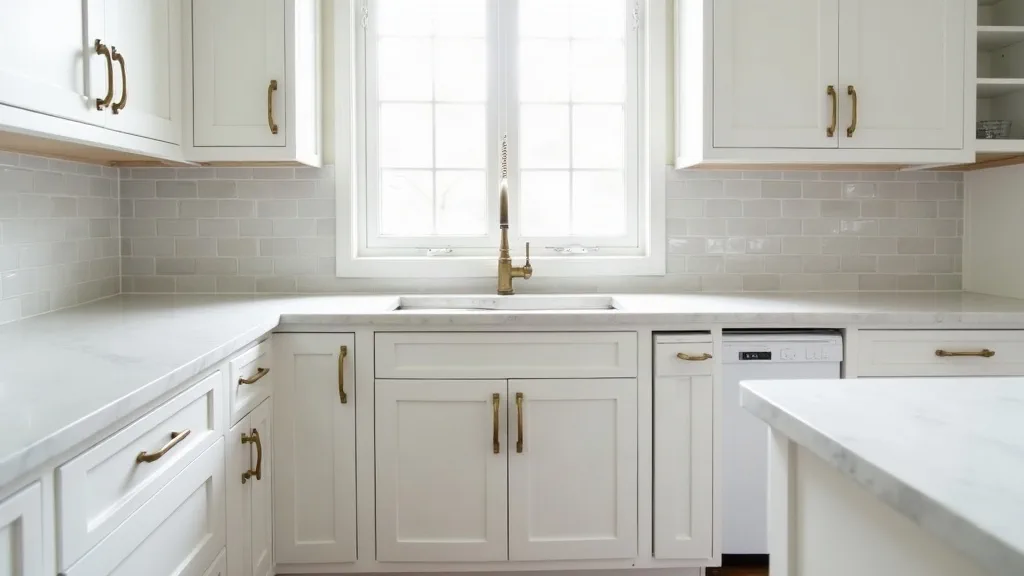
Cabinets & Countertops
Quartz Countertops in Charleston and Rock Hill, SC
Engineered stone — consistent, non-porous, and not heatproof.
Engineered stone — consistent, non-porous, and not heatproof.
Quick answer: Quartz is engineered from crushed stone and resin: consistent, non-porous and never needs sealing, but the resin can scorch under a hot pan, permanently. Southeastern Renovation templates and installs quartz countertops in the Charleston area and in York County around Rock Hill and Fort Mill, after the cabinets are set and level, as a licensed SC general contractor (CLG.127339). Call (843) 718-8177.
Related: How countertop templating works.
Non-porous means no sealing and no staining from the things that stain natural stone, which is most of why it has taken over kitchens.
The resin is what will not take heat. A hot pan set directly on quartz can scorch or discolor it, and unlike a stain that is not something that comes out. It is the single most useful thing to know before living with it.
Consistency cuts both ways. What you see in a sample is what arrives, which suits people who want to know exactly what they are getting and disappoints anyone hoping for the variation natural stone gives.
We take this work across greater Charleston, from Summerville and Goose Creek to Mount Pleasant, West Ashley and the sea islands, and on the York County side around Rock Hill, Fort Mill, Tega Cay and Lake Wylie. More on our cabinet and countertop services.
No. It is non-porous, which is the main practical advantage over natural stone and the reason it does not stain from the usual kitchen offenders.
No, and this is the one to remember. The resin binding it does not take direct heat, and scorching is permanent in a way staining is not.
Use a trivet.
Quartz for consistency and no maintenance; granite for natural variation and better heat tolerance.
Neither is better, and the honest question is which trade-off you would rather live with.
Quartz countertops are engineered from crushed stone and resin, so they are uniform and need no sealing. Quartzite is a natural stone, so every slab varies and its care depends on the stone; ask the fabricator about sealing the specific slab.