Flooring
Tile Flooring
The floor that does not care about humidity.
The floor that does not care about humidity.
Quick answer: Tile Flooring. Southeastern Renovation is a licensed South Carolina general contractor (CLG.127339) serving the Charleston Lowcountry and York County, SC. Work is coordinated by Southeastern Renovation as the general contractor. Licensed trade subcontractors handle work requiring their trade credentials; permit responsibilities depend on the project scope and jurisdiction. Call (843) 718-8177 for an estimate.
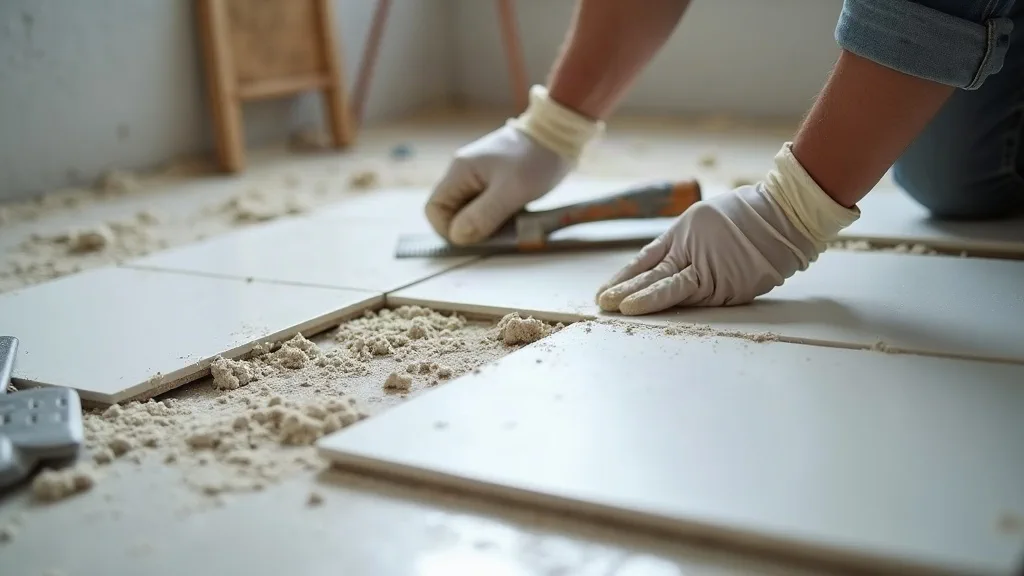
It does not swell, cup or gap with humidity. What it does do is transmit whatever the substrate does, so the preparation is the job: a floor that flexes cracks grout, and one that is not flat produces lippage between tiles that you feel before you see.
Over a crawl space, deflection is the thing to check before anything is ordered. Large format tile is less forgiving of movement than small, and the bigger the tile the flatter the floor has to be.
Grout is the maintenance item, not the tile. Sealing it and choosing a colour that will not show every mark is a decision worth making deliberately rather than at the end of the job.
Serving Charleston, Mount Pleasant, North Charleston, Summerville, Goose Creek, James Island, West Ashley, Isle of Palms, Moncks Corner, Hanahan, Ladson, Daniel Island, Johns Island, Park West, Seabrook Island, Kiawah Island, Edisto Island, Folly Beach, Ravenel, Rock Hill, Fort Mill, Tega Cay, Lake Wylie, Clover, York, Indian Land across the Charleston Lowcountry. Part of Southeastern Renovation.
Almost always movement underneath rather than bad grout. A floor that flexes — long spans over a crawl space, a subfloor that was not stiff enough for the tile size — will crack grout wherever it moves, and regrouting without addressing that just resets the clock.
Not inherently, but it is less forgiving. The larger the tile the flatter the substrate has to be, and older houses over crawl spaces are rarely flat to begin with.
It is a preparation cost, not a tile cost.
The grout usually does. Most tile itself does not, though natural stone is a different question and depends on the stone.