Decks & Fences
Fence Installation in Charleston
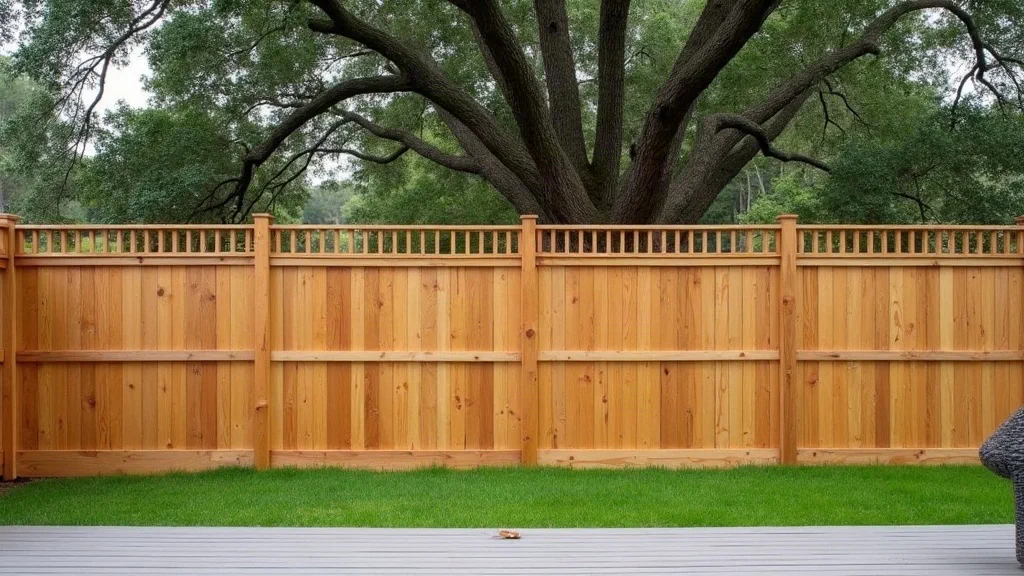
Posts set for ground that stays wet, not just for the fence above them.
Posts set for ground that stays wet, not just for the fence above them.
Quick answer: Fence Installation in Charleston. Southeastern Renovation is a licensed South Carolina general contractor (CLG.127339) serving the Charleston Lowcountry and York County, SC. Work is coordinated by Southeastern Renovation as the general contractor. Licensed trade subcontractors handle work requiring their trade credentials; permit responsibilities depend on the project scope and jurisdiction. Call (843) 718-8177 for an estimate.
That is why post setting is the part worth asking about. Concrete poured in a collar around a post can hold water against the timber rather than shedding it, and a post sitting in a wet cup rots at exactly the line where it is hardest to see. Sloping the concrete away, or gravel-setting with drainage, changes how long the fence lasts more than the choice of panel does.
Property lines matter more than people expect. A fence built even slightly over a boundary is a legal problem rather than a carpentry one, and neighbours who were relaxed about it at the time are not always the neighbours who are there in five years. Where the line is uncertain, it is worth establishing before anything is dug.
Many neighbourhoods have rules about height, material and which side faces out. That is worth checking before ordering material rather than after installing it.
Serving Charleston, Mount Pleasant, North Charleston, Summerville, Goose Creek, James Island, West Ashley, Isle of Palms, Moncks Corner, Hanahan, Ladson, Daniel Island, Johns Island, Park West, Seabrook Island, Kiawah Island, Edisto Island, Folly Beach, Ravenel, Rock Hill, Fort Mill, Tega Cay, Lake Wylie, Clover, York, Indian Land across the Charleston Lowcountry. Part of Southeastern Renovation.
Ground moisture, and usually the way they were set. A concrete collar that traps water against the post keeps it permanently wet at the soil line, which is precisely where it rots and where you cannot see it.
How the post is set matters more for lifespan than which panel goes on it.
Yes, before anything is dug. A fence over a boundary is a legal problem, not a carpentry one, and it does not get easier with time or with new neighbours.
Convention is that the finished side faces out, and in many neighbourhoods it is a rule rather than a convention.
Worth checking with the HOA before material is ordered.